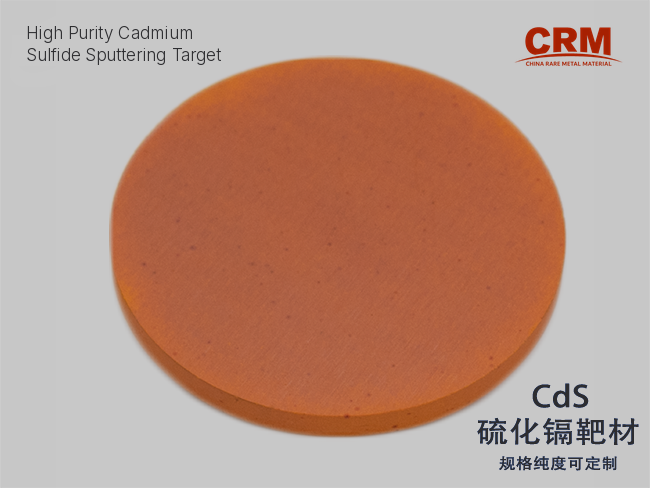
Zinc phosphide (Zn3P2) sputtering target, evaporation material & powder
Formula: Zn3P2 · SKU: CRM-SEMI-ZN3P2 · CAS: 1314-84-7
Your selections are carried into the inquiry. Include any dimensions, tolerances, or drawing references on the inquiry form.
Confirming your specification
Share the impurity limits, dimensional tolerances, backing plate configuration, and analytical reports required for your process. We will confirm the available specification, lead time, and lot documentation with your quotation.
Moisture-sealed Zinc Phosphide (Zn3P2, CAS 1314-84-7) targets and granules up to 99.999% include Cu bonding and full COA. Tetragonal α-Zn3P2 (density 4.55 g/cm³, molar mass 258.09 g/mol) provides a direct optical bandgap near 1.50 eV, strong visible-to-NIR absorption, and long minority-carrier diffusion lengths using earth-abundant elements. Because zinc phosphide sublimes and decomposes below its ~1,193 °C atmospheric melting point, CRM synthesizes stoichiometric feedstock from high-purity Zn and red phosphorus in sealed evacuated ampoules prior to vacuum hot pressing (VHP) or inert granule sizing. Lot qualification combines XRD single-phase verification with GDMS or ICP-OES elemental assays, while moisture-barrier vacuum or argon packaging prevents slow hydrolysis in humid air. Researchers and fabs deploy Zn3P2 targets, 1–5 mm granules, and -100/-325 mesh powders in thin-film photovoltaics, infrared photodetectors, and II-V semiconductor heterojunctions.
Documentation & engineering support
Certificate of Analysis (COA)Request →Safety Data Sheet (SDS)Request →Custom specificationsRequest → Open stoichiometry & target mass calculators Calculators →Technical features & applications
1. Material Science, Phase & Intrinsic Properties:
Zinc phosphide (Zn3P2, CAS 1314-84-7, molar mass 258.09 g/mol) adopts a tetragonal α-phase crystal structure with a density of 4.55 g/cm³ and an atmospheric melting point near 1,193 °C, though it sublimes and decomposes at lower temperatures under vacuum. It offers a direct optical bandgap near 1.50 eV, high optical absorption coefficients (above 10⁴ cm⁻¹), and long minority-carrier diffusion lengths. The dark grey metallic solid is water-insoluble but decomposes slowly in moist air and rapidly in acids.
2. Manufacturing, Consolidation & Purity Control:
CRM reacts high-purity zinc and red phosphorus in sealed evacuated ampoules or pressure-controlled vacuum furnaces to synthesize single-phase Zn3P2 without phosphorus loss. Feedstock is densified via vacuum hot pressing (VHP) into sputtering targets or crushed under dry argon into 1–5 mm granules and -100/-325 mesh powders. XRD and GDMS/ICP-OES confirm phase and 3N–5N purity.
3. PVD / Process Performance & Engineering Advantages:
VHP targets exhibit uniform grain structure and controlled outgassing for stable RF magnetron sputtering, while pre-degassed granules support clean thermal co-evaporation. Indium bonding to OFHC copper backing plates minimizes thermal gradients that could otherwise drive incongruent phosphorus desorption.
4. Target Industrial Applications & Supply Qualification:
Primary applications span earth-abundant thin-film solar absorbers, infrared photodetectors, II-V heterojunctions, and crystal-growth feedstock. All orders ship in dry argon-filled or vacuum-sealed moisture-barrier packs with lot COA and SDS.
Typical reference dimensions & geometries
- Planar circular targets: Ø25.4 / 50.8 / 76.2 / 101.6 mm × 3.175–6.35 mm (bonded)
- Rectangular planar plates: custom dimensions up to 250 × 125 mm (dry-packed)
- Evaporation granules & chunks: 1–3 mm and 3–5 mm sealed under dry argon
- Synthesized crystalline powder: -100 mesh and -325 mesh in moisture-barrier packs
Listed dimensions are typical engineering references rather than fixed stock commitments. Custom geometries, dimensional tolerances, and backing-plate bonding are confirmed with your quotation.
Deposition, fabrication & handling notes
Produced by sealed-ampoule vacuum reaction of high-purity Zn and red P, followed by VHP consolidation for targets or glovebox crushing/sieving for granules and powders. Indium bonding to OFHC Cu backing plates is applied with ultrasonic bond verification. COA reports GDMS/ICP-OES purity and XRD phase confirmation; shipped vacuum- or dry-argon-sealed with SDS.
Use low-power RF magnetron sputtering (1.0–2.0 W/cm²) with slow ramp-up in dry Ar to preserve Zn:P stoichiometry. For thermal evaporation, Zn3P2 sublimes congruently/semi-congruently below 800 °C in alumina or BN crucibles; co-evaporate or anneal carefully to avoid P deficiency. Strictly exclude moisture and acids during chamber venting and cleaning, as hydrolysis generates toxic phosphine (PH3) gas.
Material specifications
| Chemical formula | Zn3P2 |
|---|---|
| Synonyms / trade names | Zn3P2 · Zinc Phosphide · Trizinc Diphosphide · CAS 1314-84-7 · Zn3P2 Sputtering Target · Zn3P2 PV Absorber |
| Product code | CRM-SEMI-ZN3P2 · CAS 1314-84-7 |
| Product type | Sputtering targets / Evaporation materials / Powders |
| Material family | Compound semiconductors |
| Elements | Zn ↗ P ↗ |
| Purity grades | 99.9%, 99.99%, 99.999% |
|---|---|
| Listed forms |
|
| Reference starter spec | Quote on Request (RFQ) · Standard 50 g compound semiconductor research lot |
| Application guidance |
|
| Molar mass | 258.09 g/mol |
| Density | 4.55 g/cm³ |
| Melting point | ~1,193 °C (sublimes/decomposes at lower vacuum temp) |
| Appearance / crystal phase | Dark grey metallic-luster crystalline solid or powder |
| Solubility | Insoluble in water; decomposes slowly in moist air and rapidly in acids |
For multi-element alloys and compounds, please specify whether composition ratios are in atomic percent (at%) or weight percent (wt%).
Frequently asked technical questions
Why does Zn3P2 require dry inert handling and moisture-barrier packaging?
Zinc phosphide hydrolyzes slowly in humid air and reacts rapidly with acids to release toxic phosphine (PH3) gas. CRM seals all targets, granules, and powders under vacuum or dry argon; users should store and load materials in a glovebox or dry desiccator per the supplied SDS.
How can phosphorus loss be minimized during Zn3P2 thin-film deposition?
Because Zn3P2 tends to sublime and dissociate at elevated vacuum temperatures, use low RF sputtering power density with an indium-bonded OFHC copper backing plate, or employ controlled thermal evaporation in BN/alumina crucibles at moderated substrate temperatures.
Can CRM supply custom Zn3P2 target dimensions and backing-plate bonding?
Yes. Planar circular discs and rectangular targets are machined to your cathode drawing and indium-bonded onto OFHC copper or molybdenum backing plates. Standard research sizes ship in 2–4 weeks after specification sign-off.
What analytical testing is included in the Zn3P2 Certificate of Analysis?
Every lot COA details trace metallic impurities by ICP-OES or GDMS (supporting 99.9%, 99.99%, and 99.999% grades) alongside XRD phase identification verifying single-phase α-Zn3P2 prior to vacuum sealing.
Related materials
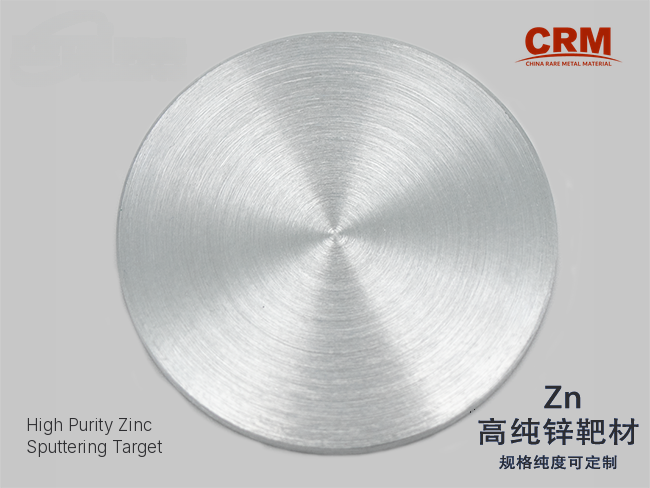
Zinc (Zn) sputtering target
Sputtering targets →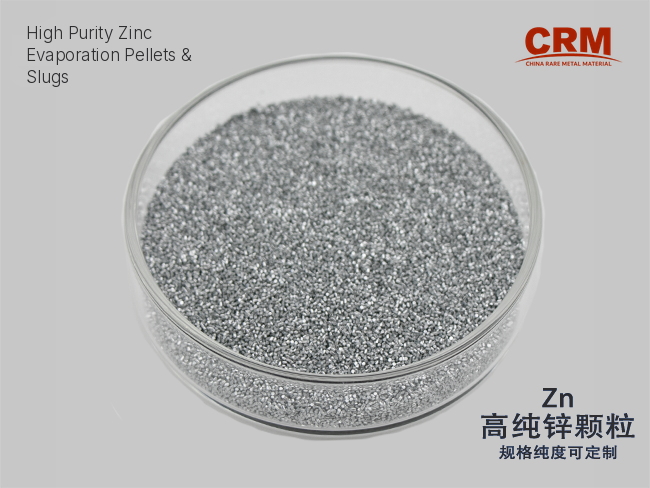
Zinc (Zn) evaporation pellets & slugs
Evaporation materials →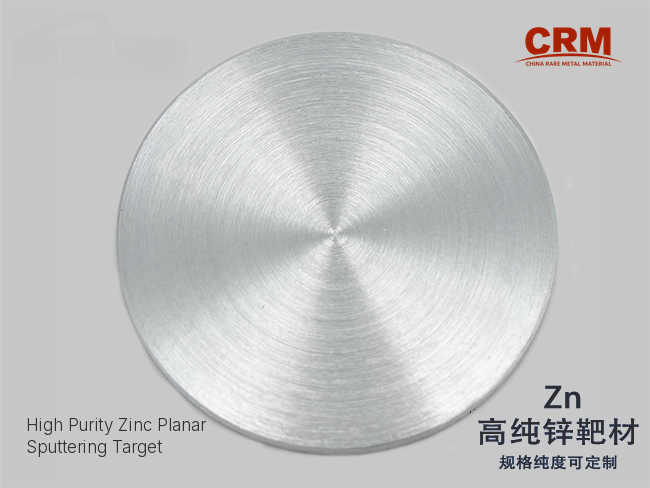
Zinc planar sputtering target (Zn)
Sputtering targets →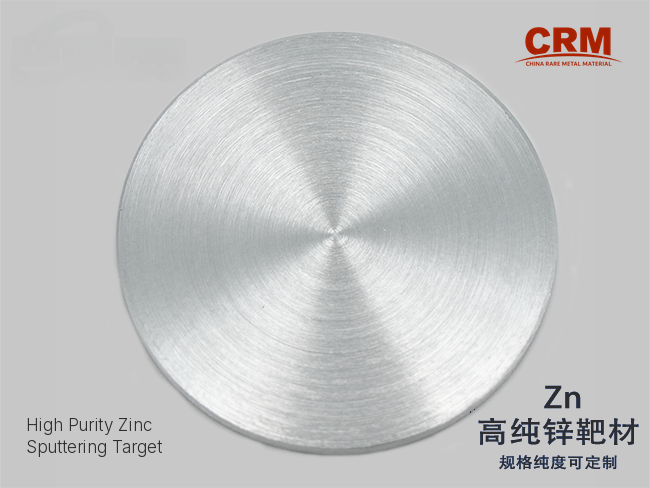
Zinc rotary sputtering target (Zn)
Sputtering targets →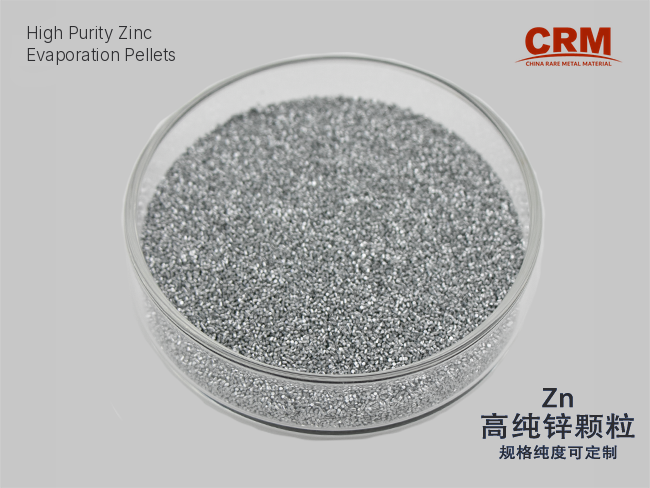
Zinc evaporation pellets (Zn)
Evaporation materials →Zinc micron powder (Zn)
High-purity metals →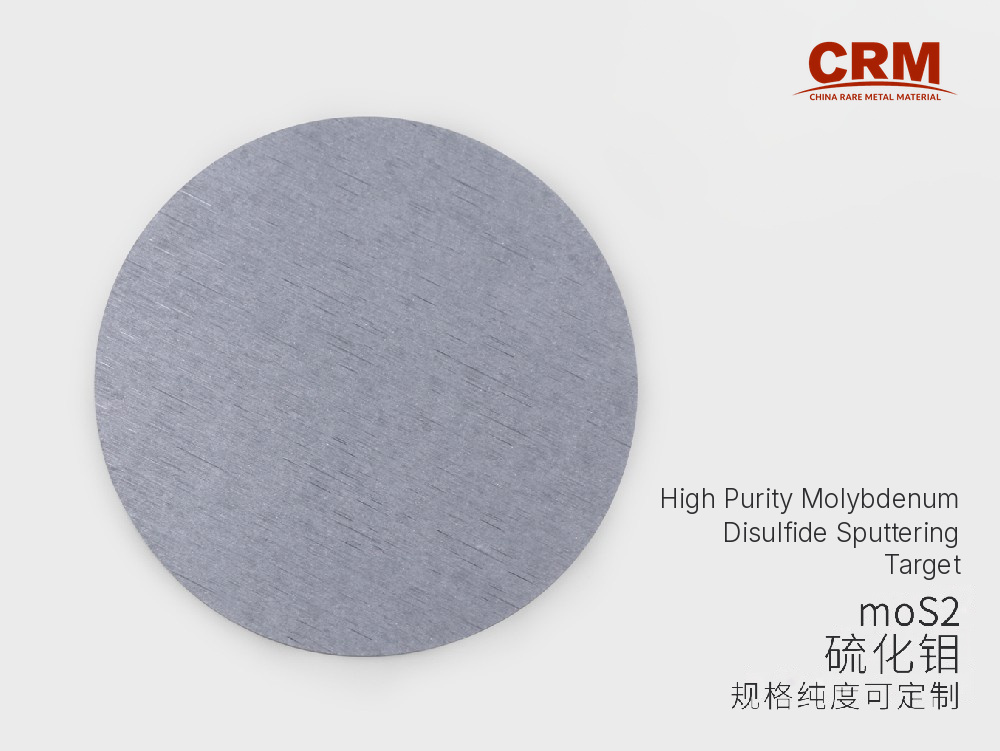
Molybdenum disulfide (MoS2) sputtering target
Compound semiconductors →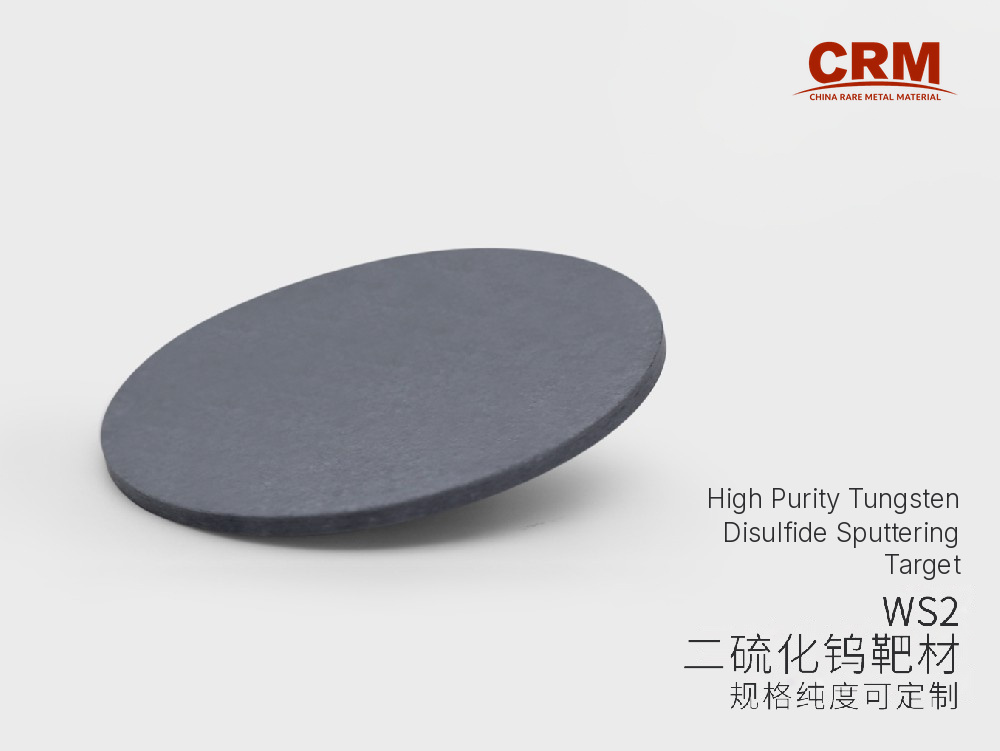
Tungsten disulfide (WS2) sputtering target
Compound semiconductors →