


|
Titanium Dioxide (TiO2) |
||||||||||||||||||||||||||||||||||||||||||||||||||||||||
Titania exists in a number of crystalline forms the most important of which are anatase and rutile. Pure titanium dioxide does not occur in nature but is derived from ilmenite or leuxocene ores. It is also readily mined in one of the purest forms, rutile beach sand. These ores are the principal raw materials used in the manufacture of titanium dioxide pigment. The first step is to purify the ore, and is basically a refinement step. Either the sulphate process, which uses sulphuric acid as an extraction agent or the chloride process, which uses chlorine, may achieve this. After purification the powders may be treated (coated) to enhance their performance as pigments.
Pigments, The most important function of titanium dioxide however is in powder form as a pigment for providing whiteness and opacity to such products such as paints and coatings (including glazes and enamels), plastics, paper, inks, fibres and food and cosmetics. Titanium dioxide is by far the most widely used white pigment. Titania is very white and has a very high refractive index – surpassed only by diamond. The refractive index determines the opacity that the material confers to the matrix in which the pigment is housed. Hence, with its high refractive index, relatively low levels of titania pigment are required to achieve a white opaque coating. The high refractive index and bright white colour of titanium dioxide make it an effective opacifier for pigments. The material is used as an opacifier in glass and porcelain enamels, cosmetics, sunscreens, paper, and paints. One of the major advantages of the material for exposed applications is its resistance to discoloration under UV light. Photocatalysis,Titania acts as a photosensitiser for photovoltaic cells, and when used as an electrode coating in photoelectrolysis cells can enhance the efficiency of electrolytic splitting of water into hydrogen and oxygen. Oxygen Sensors, Even in mildly reducing atmospheres titania tends to lose oxygen and become sub stoichiometric. In this form the material becomes a semiconductor and the electrical resistivity of the material can be correlated to the oxygen content of the atmosphere to which it is exposed.? Hence titania can be used to sense the amount of oxygen (or reducing species) present in an atmosphere. Antimicrobial Coatings, The photocatalytic activity of titania results in thin coatings of the material exhibiting self cleaning and disinfecting properties under exposure to UV radiation. These properties make the material a candidate for applications such as medical devices, food preparation surfaces, air conditioning filters, and sanitaryware surfaces. Base Information
|
||||||||||||||||||||||||||||||||||||||||||||||||||||||||
|
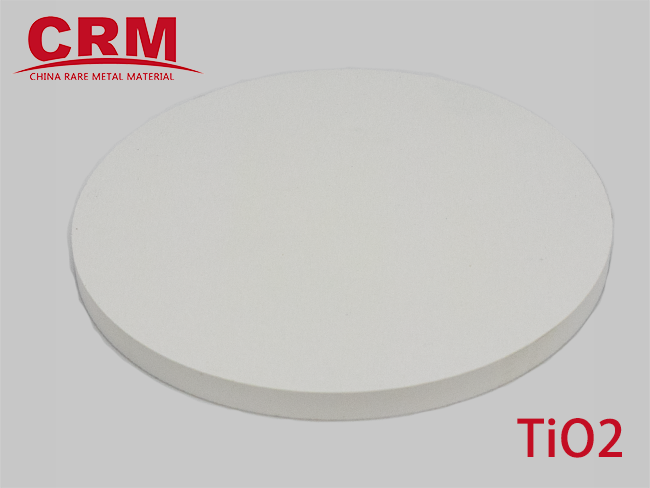
Titanium Dioxide (TiO2) Sputtering Targets Purity---99.9%,99.95%,99.99% Refractive index --- 2.5-2.9 Shape--- Discs, Plate, Step (Dia ≤200mm,, Thickness ≥1mm) Rectangle, Sheet, Step (Length ≤300mm, Width ≤200mm, Thickness ≥1mm) Tube( Diameter< 300mm, Thickness >2mm ) Application ---For RF sputtering machane,used for High index film, multilayer interference filters. Relation target--- SiO2 sputtering target. |
||||||||||||||||||||||||||||||||||||||||||||||||||||||||
|
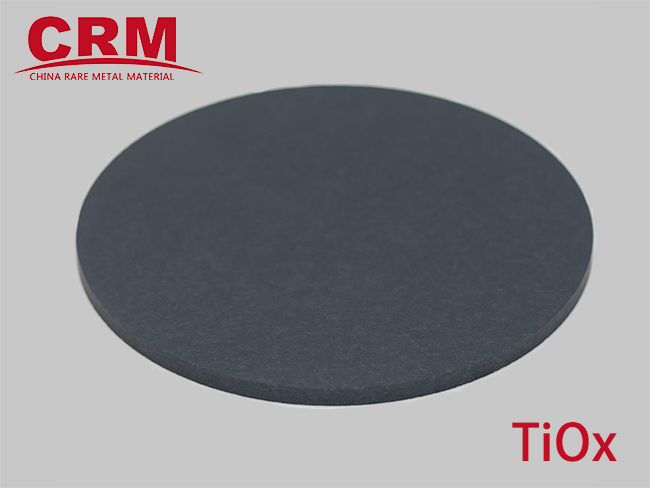
Titanium Oxide Sputtering Targets (TiOx target) (For DC sputter)
Purity---99.9%,99.95%,99.99% Shape--- Discs, Plate, Step (Dia ≤200mm,, Thickness ≥1mm) Rectangle, Sheet, Step (Length ≤300mm, Width ≤200mm, Thickness ≥1mm) Tube( Diameter< 300mm, Thickness >2mm ) Application ---For DC sputtering machane,used for high index film, multilayer interference filters. Relation target --- SiO2 sputtering target... |
||||||||||||||||||||||||||||||||||||||||||||||||||||||||
|
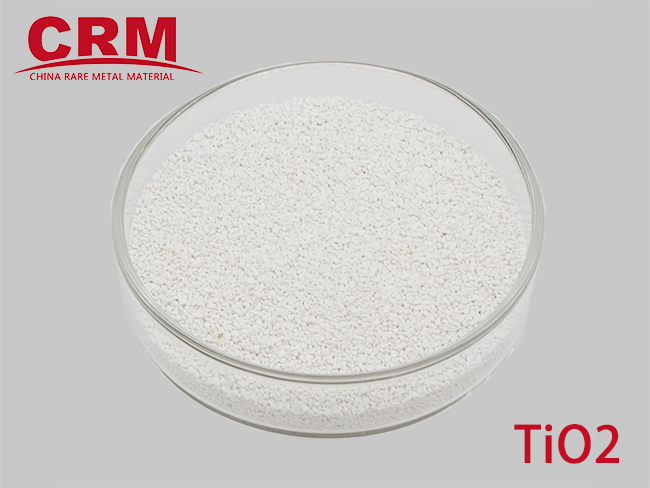
Titanium Dioxide (TiO2) Evaporation Material
|
||||||||||||||||||||||||||||||||||||||||||||||||||||||||
|
Titanium Dioxide (TiO2) Powder Purity--- 99.9%,99.99% |
||||||||||||||||||||||||||||||||||||||||||||||||||||||||
Titanium Dioxide Nanometer Powder(TiO2) Purity--- 99.5%(anatase), 99%(Rutile) Granularity --- D50:5nm (anatase), 30nm(Rutile) Specific Surface Area (M2/g) --- 120(anatase), 30(Rutile) |
 E-mail: sales@china-raremetal.com
 Tel: (86)0791-88101311
  Mobile: (86)13317053312
 Wechat ID: 13317053312
 QQ ID:752340693
 Skype ID: minnashu


